
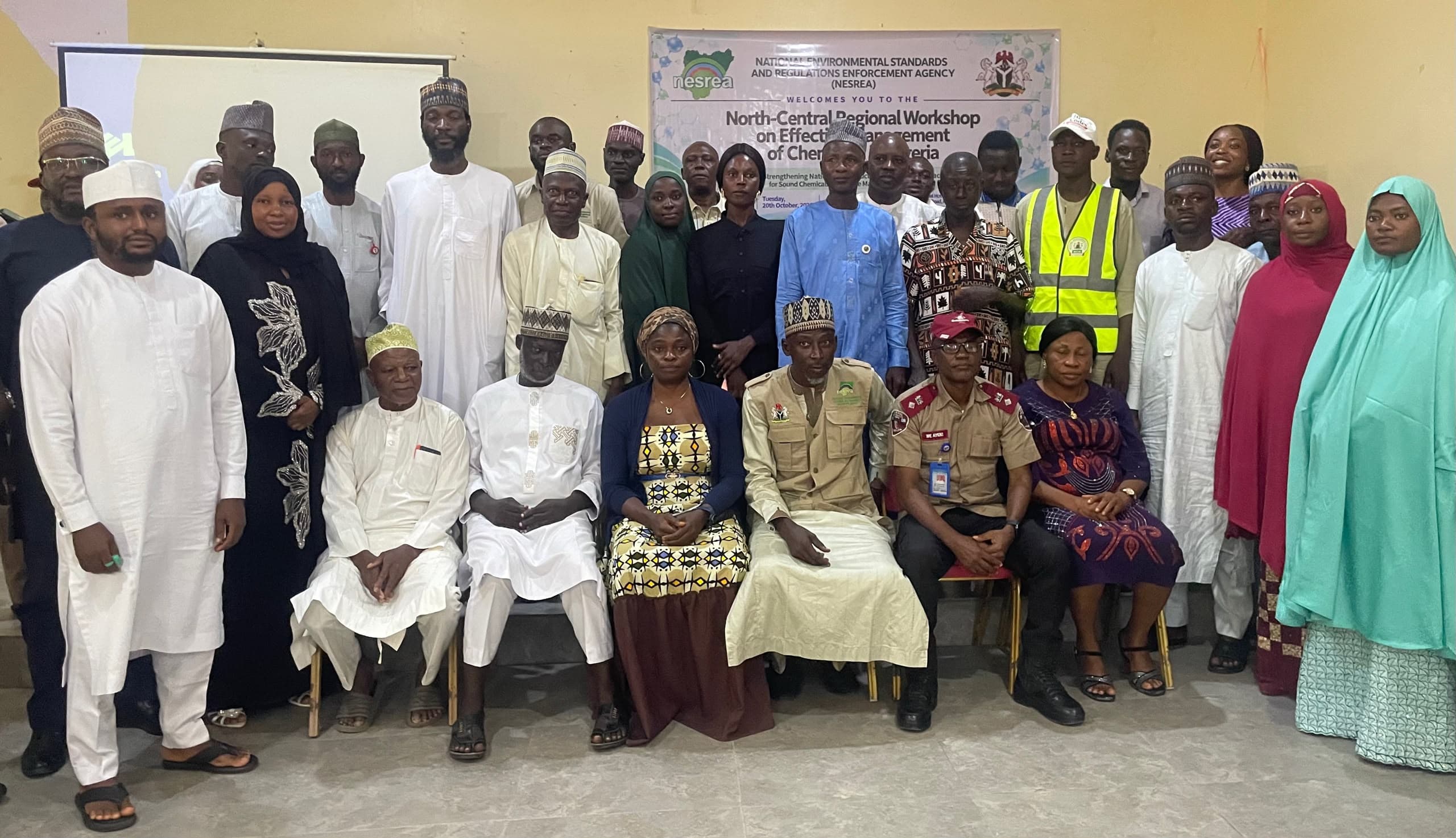
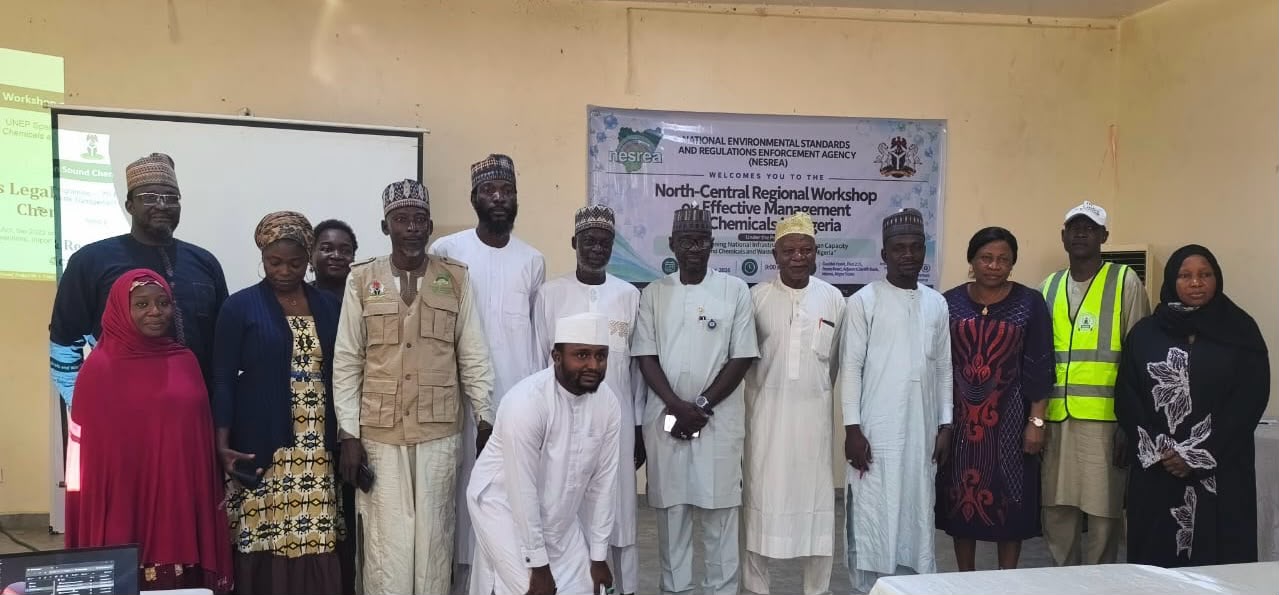
The National Environmental Standards and Regulations Enforcement Agency (NESREA) has called for effective management of chemicals and waste to protect human health and the environment.
The call was made at the North-Central Regional Workshop on Effective Management of Chemicals in Nigeria, held at Guddel Hotel, Bosso Road, Minna, Niger State.
Representing NESREA’s Director-General and Chief Executive Officer, Professor Innocent Barikor, Mrs Spanny Embiemu said chemicals were essential to agriculture, healthcare and industrial production but warned that their improper handling and disposal could cause serious harm.
She identified poisoning, fires, explosions and environmental pollution as some of the dangers associated with the unsafe handling, transportation, storage, use and disposal of chemicals, including pesticides, fertilisers, acids and petroleum products.
Mrs Embiemu said the workshop was organised under the project, Strengthening National Infrastructure and Human Capacity for Sound Chemicals and Waste Management in Nigeria, to improve chemical safety, strengthen institutional capacity and promote environmentally responsible practices.
She stressed the need for greater public awareness, technical knowledge and strict compliance with environmental standards and regulations, noting that effective chemical and waste management required collective responsibility.
In his welcome address, the Niger State Coordinator of NESREA, Egigogo Aliyu Muhammad, called for stronger collaboration among regulatory agencies, academic institutions and other stakeholders to address challenges associated with chemical use and waste management.
He urged stakeholders to sustain cooperation in strengthening environmental protection and ensuring compliance with established safety standards.
In their goodwill messages, Professor Muhammad Ndamitso of the Federal University of Technology, Minna, and the Chairman of the Nigerian Environmental Society, Dr Yahya Madaki, emphasised public awareness, scientific research and strict enforcement of environmental regulations.
They called for stronger partnerships among government agencies, academic institutions and other stakeholders to promote safe chemical handling and responsible waste disposal.
Other contributors included the representative of the National Agency for Food and Drug Administration and Control (NAFDAC), Mrs Igwe Lilian Onyinyechi; the Head of the Department of Chemistry, Ibukun Modupe Popoola; and CRC WE Ayeni of the Federal Road Safety Corps (FRSC).
They highlighted the importance of regulatory compliance, capacity building, stakeholder collaboration and road safety in the transportation of hazardous chemicals.
The speakers also advocated stronger institutional frameworks and evidence-based approaches to preventing chemical-related hazards and protecting public health.
Participants called for sustained regulatory enforcement to ensure the safe management of chemicals throughout their life cycle, from production and transportation to storage, use and final disposal.
They expressed optimism that improved coordination among relevant institutions would strengthen Nigeria’s capacity to manage chemicals and waste safely while promoting a healthier environment.




Comments
No comments yet.